

By Fiona Chan
Hong Kong, 26 January 2021: In a landmark ruling, the Court of Appeal has reinstated male indigenous villagers’ full rights to build homes on both private and government-sourced land in the New Territories.
The case of Kwok Cheuk Kin and Lui Chi Hang, Hendrick v Director of Lands, Chief Executive in Council & Secretary for Justice [2021] HKCA 54, concerned a challenge to the constitutionality of the government’s Small House Policy.
The appeal judges overturned a decision by the Court of First Instance that the Small House Policy was unconstitutional as it was inherently discriminatory on the grounds of social origin or birth and gender in contravention of the Basic Law and the Hong Kong Bill of Rights Ordinance. Further, they held that the policy was constitutional in its entirety.
The CA’s ruling thus allows male indigenous villagers to continue building three-storey houses not only on land they own, but also on plots granted by, or exchanged with, the government.
Background
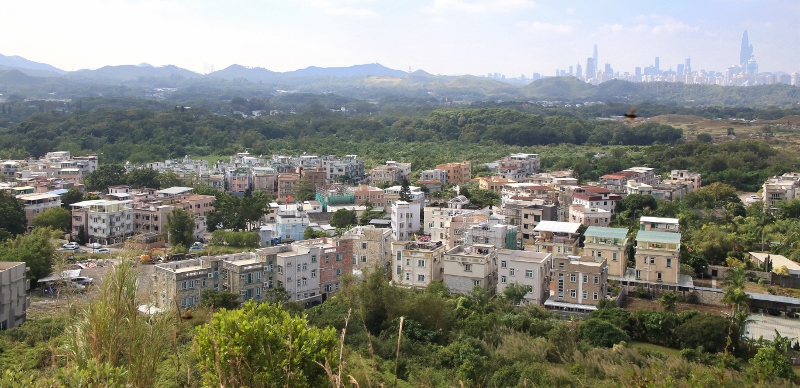
The Small House Policy was implemented in 1972. It allows a male indigenous villager in the New Territories to apply, once in his lifetime, to build a house on a suitable site in his own village. This is generally known as the “ding right”. The house must be no more than three storeys with each floor measuring a maximum of 700 sq ft.
The grants given by the relevant authority under the policy take three forms: free building licence (on private land); private treaty grant (on Government land); and land exchange (surrender and re-grant).
Previous proceedings
The two applicants, a former civil servant and a social worker, challenged the Small House Policy on the grounds that it was unconstitutional because it was discriminatory.
The central question was whether the policy was rendered lawful by Article 40 of the Basic Law, which states “the lawful traditional rights and interests of the indigenous inhabitants of the ‘New Territories’ shall be protected by the Hong Kong Special Administrative Region”.
At the Court of First Instance hearing in 2019, the judge examined the history of land administration from just prior to 1898 when the New Territories was leased to Britain by China. He concluded that only the free building licence – not private treaty grant or land exchange – could be regarded as a traditional right.
Hence, the ding retained the right to exercise their privileges on private land, but not public.
Court of Appeal ruling
While the government accepted the Small House Policy was inherently discriminatory, the CA had to consider whether ding rights satisfied the “lawful” and “traditional” elements under Article 40 of the Basic Law.
The judges held that such rights were a matter of historical fact and were recognised to be lawful and traditional when the Basic Law was promulgated in 1990. Further, the provision of the Basic Law continued and elevated this protection after the 1997 Handover. More importantly, the CA found that ding rights were recognised by the Hong Kong legal system.
Thus, the judges ruled that private treaty grants and land exchanges were also lawful and that the Small House Policy was constitutional in its entirety.
Significance of the case
This was the first legal challenge to the Small House Policy since it was implemented almost five decades ago, making it a landmark case in the jurisprudence of Hong Kong Constitutional Law. It should also be noted that the applicants have indicated their intention to pursue the matter to the Court of Final Appeal.
As a Partner in BC&C, Fiona Chan specialises in dispute resolution and is experienced in a wide range of civil litigation. Her core practice areas include conveyancing and property, Will drafting, estate administration and probate matters, while she is an appointed member of the Panel Solicitors for the Official Administrator. She can be contacted at fionachan@boasecohencollins.com.