

Dear Friends and Colleagues
Hong Kong, 21 January 2026: Stroll amid the high-rise blocks of Lok Fu and a strange sight looms into view: a huge concrete-covered slope, almost 100m tall, painted with red and white squares. It is Checkerboard Hill, for decades a visual guide for pilots making the notoriously difficult landing at Kai Tak airport. Spot the marker, bank right, avoid the buildings and line up the runway. A hair-raising experience for passengers – including, many times, this writer – before the airport closed in 1998.
Once faded and overgrown, Checkerboard Hill has since been lovingly restored by the authorities as a monument to a bygone age. A magnet for nostalgia buffs, curious tourists and relaxing residents alike, its grassy peak offers a spectacular view of Kowloon.
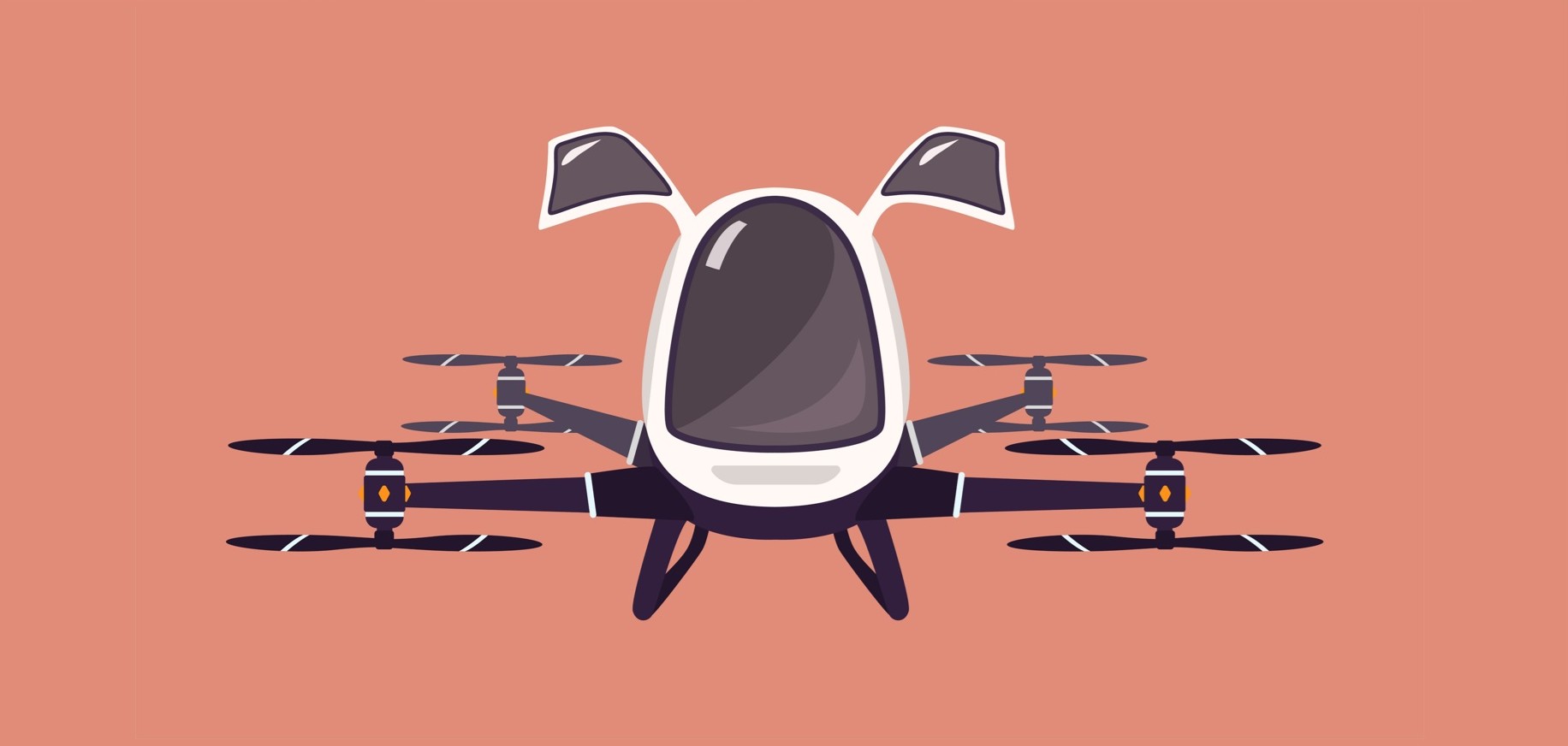
And now, we’re going back to the future, for passengers will soon be landing in downtown Hong Kong again. Except there will be no visual markers, runways or even pilots. Welcome to the Drone Age, my friends, full of geek-speak about UAM (urban air mobility), UAVs (unmanned aerial vehicles) and eVTOLs (electric vertical take-off and landing aircraft). Soon, Hong Kong’s skies will be full of pilotless vessels ferrying food deliveries, cargo, medical supplies and – gulp – people around the city.
When, exactly? Trials for passenger drones could begin “in two to three years”, opines deputy director general of civil aviation Dominic Chow. Time-saving travel around the Greater Bay Area (the huge economic hub comprising Hong Kong, Macau and nine cities in Guangdong province) offers massive potential. “We are promoting not only cross-boundary flights, but also the required coordination between both sides for standard-setting and technological innovation,” he adds.
Kellen Tse, senior vice president of Mainland flying taxi developer AutoFlight, shares his confidence. “In 10 years’ time and in Hong Kong alone, perhaps thousands of eVTOLs will be flying,” he predicts. His firm has completed the world’s first two-ton eVTOL cargo shipment, delivering essential supplies to an offshore oil platform in the South China Sea in just 58 minutes. A sea-going vessel would take 10 hours. Mainland rival EHang, meanwhile, is conducting pilotless trips for tourists in Guangzhou and Hefei.
What’s the potential? Think tank Our Hong Kong Foundation predicts this city’s low-altitude economy could generate US$45 billion in added value by 2050. We have just hosted Airspace Asia Pacific 2025, a conference organised by CANSO, the global body for air traffic management. Its president Simon Hocquard envisages “phenomenal growth” in low-altitude business across Asia Pacific with Hong Kong potentially a role model for the rest of the world.
Next door, Shenzhen already has more than 1,000 vertiports – eVTOL take-off and landing platforms – while Guangdong is home to 15,000 low-altitude industry chain enterprises, 30% of China’s total. Chinese firms are not the only pioneers in this market, of course, eVTOL development is a global air race. US firms such as Wisk Aero, Joby Aviation and Elroy Air are major players, while some EU nations have government-backed programmes.
Still, there’s an elephant in the eVTOL: public trust. Would you hop on board an unmanned flying machine? As renowned aviation historian Dan Bubb points out, the bar for safety is – erm – sky high. Even minor setbacks will put off the public. At Silicon Valley’s Wisk Aero, design chief Uri Tzarnotzky is adamant about safety. He points out that 90% of a passenger jet flight is automated. “Similarly, we’re flying a pre-programmed route,” he reasons, assuring us that “multi-vehicle supervisors” on the ground can intervene in the unlikely event of a problem. Hmm.
Hong Kong, it appears, is forging ahead regardless. It has unveiled a blueprint for a massive new logistics hub – with a zone reserved for freight forwarding and low-altitude economy firms – close to the Mainland border. Aridge, the affiliate of Chinese electric vehicle maker Xpeng, is reportedly planning to be the first Mainland eVTOL maker to list on the Hong Kong Stock Exchange. Transport secretary Mable Chan confirms a cross-border action plan to integrate manned and unmanned aviation is underway. “Hong Kong is mobilising capital and risk management solutions for the entire industry,” she promises.
IPOs, stocks and the regulatory landscape – this brings me to the sad passing of fearless activist investor and champion of corporate governance David Webb, aged 60, after a lengthy illness. News outlets at home and abroad offer glowing tributes to his integrity, courage and candour in his relentless pursuit of transparency and justice across our financial sector. David had made Hong Kong his home since 1991 and I was privileged to meet him on many occasions. May he rest in peace.
Cut from similar cloth is Neil Kaplan KC, widely regarded as “the father of Hong Kong arbitration”. Neil is my latest guest on Law & More, reflecting on his distinguished legal career spanning six decades, having first arrived here in 1980 to serve in the pre-handover Attorney General’s Chambers. He speaks with marked humility and considerable authority. Please listen.
Having devoted much of this column to flying taxis, I should point out in closing that our troublesome road-going ones continue to make news. The much ballyhooed roll-out of premium taxi fleets – aimed at addressing long-standing complaints about bad behaviour by cabbies – has slowed to a crawl, with only 1,300 such vehicles, just a third of the government’s target, hitting the streets thus far. Stakeholders blame low earnings, a lack of charging facilities and (of course) competition from ride-hailing services for the disappointing numbers.
Let’s hope our eVTOL passengers fare better. In looking to the future, there’s no denying our current taxi industry has – rather like that hill in Lok Fu – a somewhat chequered history.
Until next time, everybody!
Colin Cohen
Senior Partner
Boase Cohen & Collins