

By Teresa Leung
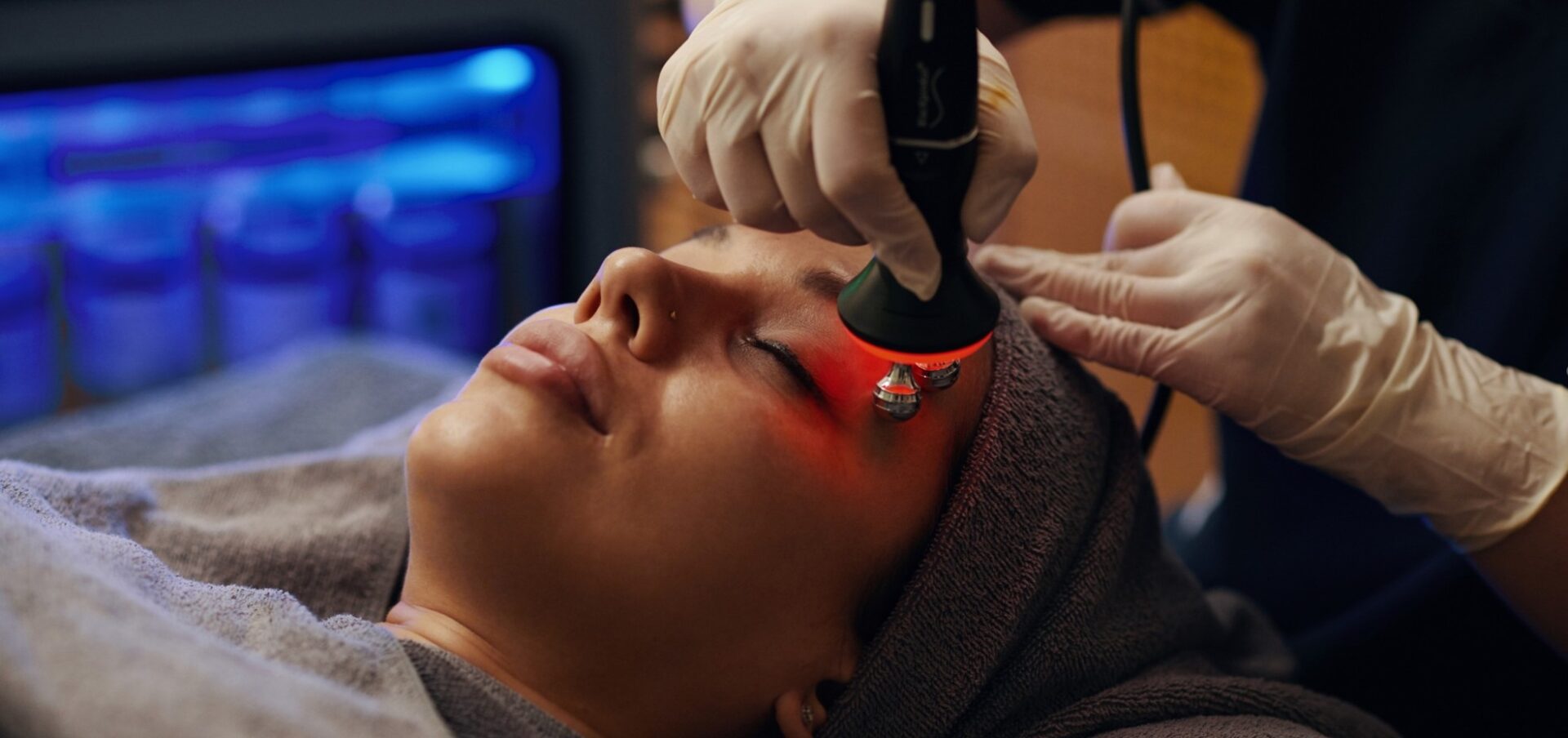
Hong Kong, 20 November 2024: Can you sue a beautician if your treatment goes wrong? The answer – as you might expect, given that Hong Kong’s “medical beauty” industry remains largely unregulated – is hardly straightforward, but is worth exploring. After all, our city is seeing an increasing number of criminal prosecutions for unlicensed medical practices, a trend that would appear to give scope for potential civil claims.
In the latest criminal case, heard earlier this month, a former beautician was sentenced to five months in prison for injecting hyaluronic acid fillers into a woman’s forehead at a beauty centre in Tsim Sha Tsui. The victim suffered side effects, including skin discolouration, pain and dizziness, and was left with a permanent scar. The defendant was found guilty of performing medical treatment without registration resulting in personal injury to another.
The hearing came six weeks after another beautician was jailed for seven weeks over a botched botox injection at an aesthetic treatment centre in Jordan. Her colleague was earlier jailed for four months for that incident and administering two other injections that left customers with painful side effects.
In an earlier article, we examined the lack of regulation for medical beauty services in Hong Kong and the potential for malpractice. Now, we can look at the options available to someone who feels they have suffered illness, injury or any other unwanted side effect from treatment.
First, in a claim of malpractice during beauty treatment, it is important to distinguish if the defendant is a registered medical practitioner or not. For the former, the landmark English tort law case of Bolam v Friern Hospital Management Committee [1957] 1 WLR 582 lays down the typical rule for assessing the appropriate standard of reasonable care in negligence cases involving skilled professionals such as doctors.
The so-called Bolam rule declares that the professional is not in breach of their duty of care if they act in a manner which is in accordance with practices accepted as proper by a responsible body of other medical professionals with expertise in that particular area. If this is established, it does not matter that there are others with expertise who would disagree with the practice.
Thus, a plaintiff pursuing a claim of negligence against a medical professional must prove: (i) there is a normal practice which is applicable to the case; (ii) the defendant has not adopted it; and (iii) the course taken by the defendant was one which no responsible professional person of ordinary skill would have taken.
However, our city’s Consumer Council – which has long warned citizens of the potential risks of medical beauty treatments – has found that more than 80% of procedures are carried out by beauticians or therapists, meaning the Bolam test does not apply. Thus, the crucial question arises as to whether non-medical personnel owe a duty of care to their customers. Establishing the existence of a duty of care is fundamental to determining liability in negligence cases.
There are three general approaches to determining the common law duty of care: (i) whether the damage is foreseeable, whether there is sufficient proximity between the parties, and whether the imposition of a duty of care is fair, just and reasonable; (ii) whether the defendant has “assumed responsibility” to the claimant; and (iii) a test whereby the law should develop novel categories of negligence incrementally and by analogy with prescribed categories.
In another important English case, Hedley Byrne & Co Ltd v Heller & Partners Ltd [1964] AC 465, the courts established that individuals who hold themselves as possessing particular expertise are held to a higher duty of care. The rationale is that those who claim to have specialised knowledge and abilities must exercise a correspondingly greater level of care when rendering their services.
In a recent Malaysian case, Teng Ngit Yoong v Liew Nyok Fen [2020] MLJU 862, the court found that a beautician did indeed owe a duty of care to her customer. This represents an important precedent and results in a critical follow-up question: What specific standard of care should be expected of beauticians and beauty salons when providing their services?
It would appear that the appropriate standard is that of a reasonably competent practitioner within the beauty industry. This means beauticians must exercise the care, skill and diligence that would be expected of a responsible and qualified member of the profession. While not rising to the level of medical negligence, this standard still imposes meaningful obligations on beauticians to ensure the safety and wellbeing of their clients.
Teresa Leung is a Consultant with BC&C. Medical negligence is one of her core practice areas which also include insurance, personal injuries, employees’ compensation claims and arbitration. She can be contacted at teresaleung@boasecohencollins.com.