

By Alex Liu
Hong Kong, 10 July 2023: Long-awaited reform of Hong Kong’s taxi industry appears to be underway with two landmark bills being introduced to the Legislative Council this week. The proposals aim to combat driver malpractice, encourage higher standards of service quality and improve regulation of the sector. If adopted, the measures will also see tougher penalties for the illegal carriage of passengers, a development directly affecting ride-hailing giant Uber.
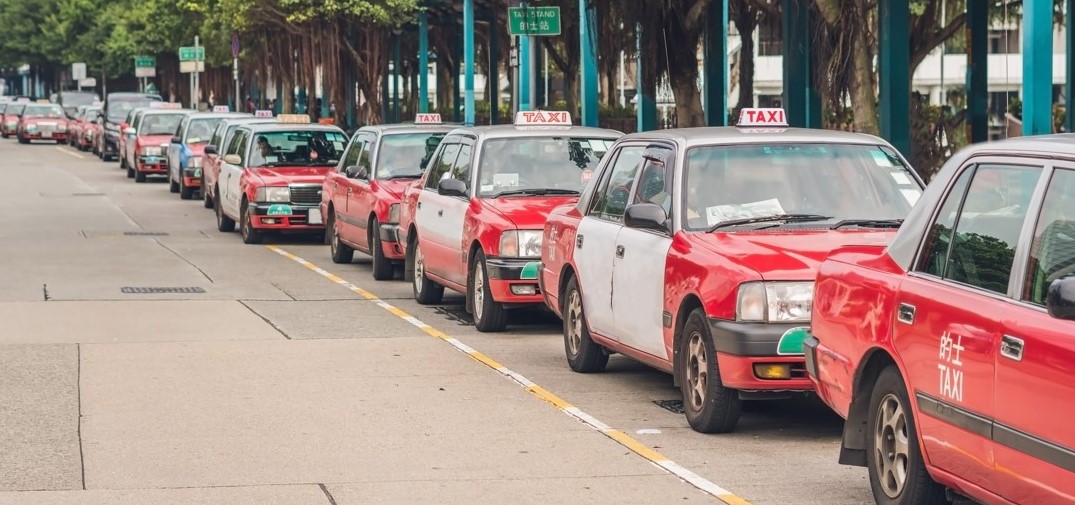
Existing regulation of this city’s taxi industry can reasonably be described as loose. There are some 18,160 taxi licences owned by about 9,000 individual and corporate licence holders. These licenses are issued without any conditions directly related to service quality. It should also be noted that although there are around 210,000 citizens holding a valid taxi driver licence, only about 59,000 work regularly.
Background
Hong Kong is not unique in having issues with what the government terms “personalised point-to-point transport services”. All over the world, taxi industries are shrinking and ageing as they lose market share to ride-hailing services, Uber being the biggest player.
In this city, there has been growing criticism over taxi services and drivers’ conduct. Complaints have shot up by 93% in the past two years. Most grievances relate to drivers being rude, overcharging, cherry-picking passengers or taking circuitous routes. However, there are also increasing concerns over safety after a spate of high-profile accidents involving elderly drivers. More than half of this city’s licensed cabbies are in their 60s or older.
Taxi industry lobbyists have long argued that Uber is “poaching” younger drivers. On average, cabbies earn about HK$20,000 a month and must pass a 45-minute written exam to obtain a licence. Uber offers younger people with a driving licence more flexible hours and decent income for what, in many cases, is a side job, and there is no need to sit a test.
Proposals
The two pieces of legislation are the Road Traffic Legislation (Enhancing Personalized Point-to-point Transport Services)(Amendment) Bill 2023 and the Taxi-Driver-Offence Points Bill. The former covers the first three proposals outlined below, the latter the fourth.
Taxi fleets: Allow existing taxi owners to form a fleet and apply to the Transport Department for a Taxi Fleet Licence, the aim being to enhance service quality through professional fleet management under a regulated platform. Each vehicle must be less than three years old and at least 10% of the fleet must be accessible to people with disabilities.
Vehicle capacity: Increase maximum passenger capacity from five to six to provide the public with more choice. Currently, 80% of taxis seat four passengers, the rest five. Some operators have vehicle models with six passenger seats but must comply with the current limit of five passengers.
Stiffer penalties for illegal carriage: Currently, Uber drivers – or, indeed, anyone else – found guilty of providing illegal ride-hailing services face a HK$5,000 fine upon first conviction and HK$10,000 for each subsequent one. The government proposes increasing these to HK$10,000 and HK$25,000 respectively. Similarly, the vehicle licence suspension will be doubled to six months for the first offence and 12 months for any thereafter.
Driver offence points system: This new regime will see cabbies handed three, five or 10 demerit points if they violate any of 11 offences. If the driver accumulates 15 or more points within two years, they will be disqualified from operating a taxi for three months, rising to six months for subsequent 15-point totals.
Comment
It remains to be seen how effective these measures will be in enhancing the quality of taxi services. Fleets, increased passenger capacity and a clampdown on driver malpractice, when all taken together, offer a carrot-and-stick approach to improvement.
Overall, however, they do not address the core problems of an ageing driver pool and lack of incentives for younger citizens to enter the profession, issues that are directly related to the ongoing presence of Uber. On this point, the increased illegal carriage penalties are unlikely to deter the majority of the firm’s drivers.
Since arriving in Hong Kong in 2014, Uber has proved immensely popular with citizens and has expanded quickly, but ride hailing remains illegal without a car hire permit and the firm has faced strong resistance from taxi operators. Uber has always insisted it wishes to work with the government and taxi industry to improve the city’s overall mobility.
So, while welcoming these proposed measures from our government, it is clear that bigger and more complex challenges await.
Alex Liu is Managing Partner of BC&C. Among his many official appointments, he is a Panel Chairman of the Transport Tribunal, which hears appeals against decisions made by the Commissioner for Transport on matters such as vehicle registration and licensing, driving licences and car hire permits. He can be contacted at alex@boasecohencollins.com.