
By Pádraig Seif
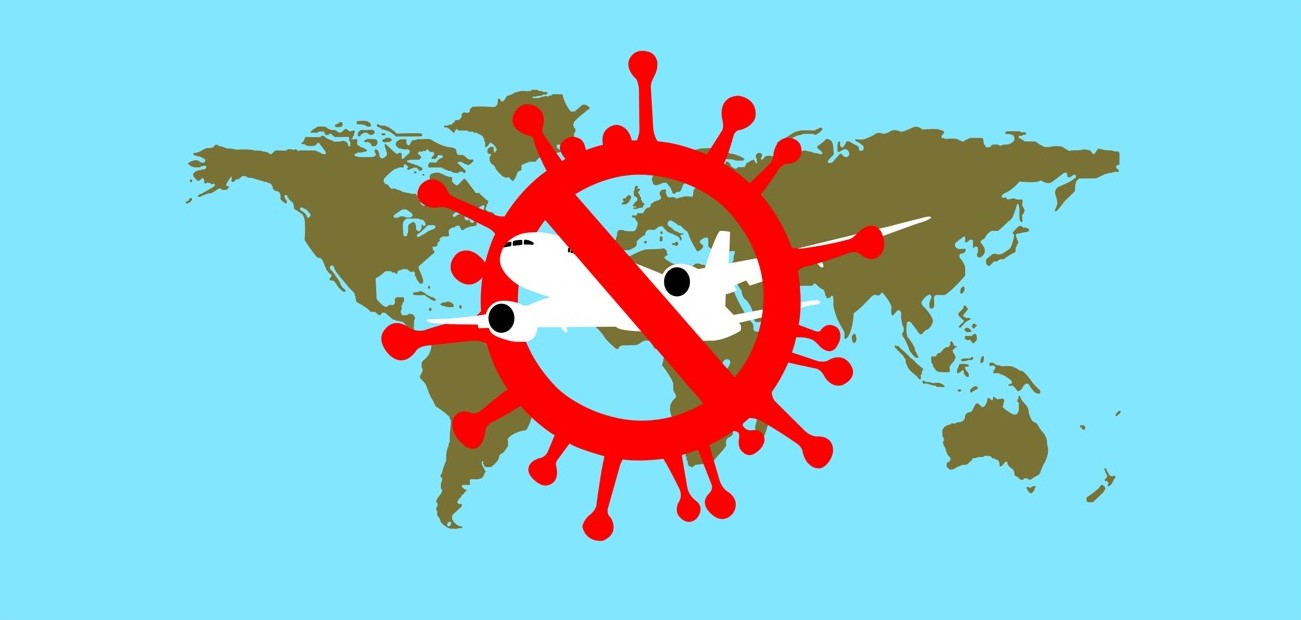
Hong Kong, 2 August 2022: One direct effect of the government’s handling of the Covid-19 pandemic is that living in Hong Kong has been somewhat of a challenge since early 2020. Especially if you need to travel.
Maybe the following sounds all too familiar to the esteemed reader: flights into Hong Kong are cancelled last minute. New air tickets need to be arranged, at short notice, on a different carrier and at a much increased price simply to ensure the arrival date does not change – thanks to the quarantine hotel bottleneck. Just to have the same procedure repeated again and again. Currently, the client topping the unofficial rebooking charts had to rebook his flight to Hong Kong a grand total of five times.
Maybe the following also sounds familiar: the European Union is slow and falling apart at the seams. EU regulations and directives are unintelligible and create unnecessary red tape. EU law burdens businesses and essentially is an unworkable compromise between Northern European versus Southern European interests. EU lawyers speak in riddles and use terms like “direct effect” without anybody understanding what they mean. In general, it is fair to say that the EU and its body of law do not have the best reputation.
But! The good news is that you may well be entitled to compensation if the travel drama sounds familiar to you. This is due to a surprisingly little-known EU regulation and the “direct effect” of such rules. The regulation in question is EC No. 261/2004. This grants air passengers certain rights to compensation and assistance in the event of, amongst other things, cancellation of a flight.
So what is it with this “direct effect”? It simply means that an EU regulation can be enforced directly in member states without the need for any additional national legislation. It serves as your cause of action. That is what EU lawyers refer to as “direct effect” of EU law and which applies to specific EU law. In the case of EC261/2004, the governing clause enabling the direct effect is Article 288 of the Treaty on the Functioning of the European Union.
Right. So there is an EU law that applies directly and may entitle me to claim compensation. But what are the conditions triggering such compensation for a cancelled flight? Ah, true to colour, there are many variations of the claims included in EC261/2004, but allow me to focus on the most common case of a Hong Kong resident returning from an EU airport.
Firstly, the flight needs to have been scheduled for departure from an EU airport. Whether the airline is an EU one or not is then irrelevant. This means EC261/2004 covers the commonly used Middle Eastern carriers such as Emirates, Qatar and Turkish Airlines and also Cathay Pacific.
Secondly, your flight needs to have been cancelled less than 14 days prior to the scheduled departure date. Thirdly, the cancellation was not caused by “extraordinary circumstances”. Ah. The fun question then becomes: what exactly are extraordinary circumstances?
These are actually narrowly defined and include air traffic management decisions, political instability, adverse weather conditions and (air) security risks. The regulation does not, crucially in the case of Hong Kong, make any reference to public policy decisions and flight bans due to pandemics.
Whereas airlines may argue that any cancellation of flights was due to the Hong Kong government banning an airline for carrying too many Covid-positive passengers – and this therefore constitutes “extraordinary circumstances” – it is not anticipated or specifically spelt out by the EU regulation. Passengers may argue that, regardless of the public policy decision, it is the airline’s fault for transporting too many infected passengers.
In my experience, the airlines will not allow this question to be decided by a court. Once the court summons is issued the carrier usually pays. Whether that is for fear of a precedent or to avoid adverse publicity remains known only to the airline.
Lastly, the airline can extricate itself from liability for compensation by offering alternative flights that reach the final destination either:
- Less than four hours after the original arrival time (if the passenger was notified of the cancellation less than 14 days but not less than seven days prior to the scheduled departure of the original flight) or;
- Less than two hours after the original arrival time (if the passenger was notified of the cancellation less than seven days prior to scheduled departure of the original flight). This, however, in the case of Hong Kong, virtually never takes place.
So far so good. But how much compensation are passengers entitled to? For a cancelled flight from any EU airport to Hong Kong, the passenger is generally entitled to €600. This is in addition to the reimbursement of the ticket and other assistance (meals, hotels, etc) provided to the passenger.
Ah, but my cancelled flights were back in 2020, have I not missed my chance to claim compensation? Although the time limits vary from country to country, generally speaking if the cancelled flights were within the past three years you can still claim compensation.
That is all well and good, but my cancelled flight originated from post-Brexit UK to Hong Kong. Doesn’t that preclude my claim under the EU regulation? Surprise! Despite the rhetoric, the UK actually has kept many EU consumer rights on the statute book. In this instance, the law is referred to as “Regulation UK/261”. The rules are duplicated and, in some instances, a passenger may now be covered by both EU regulations as well as UK/261. Of course, you may still only claim compensation once. The main difference is the currency of the compensation. Passenger claims under Regulation UK/261 are in pounds sterling. For Hong Kong it usually is £520.
Alright. So how do I practically get my compensation? It may take some time, but every journey starts with the first step. In this case, it would be to contact the airline by email with a claim for compensation and demand payment within a reasonable time, say four weeks. Attach your original booking as well as the cancellation email from the airlines. And ensure to refer to the EU regulation or Regulation UK/261 when claiming compensation.
Usually an auto-reply with a reference number is received and please be sure to keep that email for later proof of your claim. If no auto-response is forthcoming, send a registered letter in order to document your claim. Then sit back and expect nothing to happen. Or hope that maybe the airline will send you a cheque. If they do not, you may send a reminder after your original deadline lapses with an extended deadline.
Should the airline not respond, do not throw in the towel just yet. More often than not I have encountered airlines refusing to engage their passengers on such matters until you take the next step: hire a lawyer and issue court proceedings or the locally available arbitration proceedings. Unsurprisingly, this does get the attention of the airline. Start to finish, in my experience, the whole process takes about 10 to 12 months.
So, there we have it: direct effect in real life. And EU law which is good and popular enough to be transposed into UK law after Brexit. Imagine that!
Pádraig Seif, a Foreign Legal Consultant for BC&C, is admitted as a German Rechtsanwalt as well as an English Solicitor. Through his various positions with major international law firms and in-house roles in Frankfurt am Main, Singapore and Hong Kong, he has in-depth experience in investment funds, asset management, international commercial transactions and corporate law as well as tax structuring. He can be contacted at padraig@boasecohencollins.com.