

By Alex Liu
Hong Kong, 12 July 2021: New rent control laws designed to better protect tenants of subdivided flats are likely to be in place by the end of this year or early 2022. The Landlord and Tenant (Consolidation) (Amendment) Bill 2021 is the government’s attempt to alleviate the long-standing problem of unaffordable housing in Hong Kong.
The bill will have its first reading in the Legislative Council this week and is expected to receive widespread support from lawmakers. The proposed measures include: significant fines for landlords who overcharge; tying rent increases to a market index, capped at 15%; and giving current tenants priority in lease renewal.
Background
Hong Kong is ranked as the world’s most expensive property market and officials have identified the lack of affordable housing as one of the most crucial issues facing the city. The average waiting time for public housing is almost six years, with more than 253,000 applicants currently on the waiting list, according to the Housing Authority.
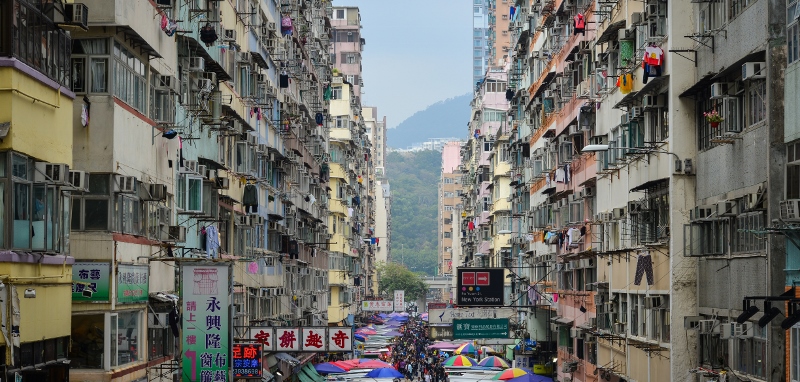
The long wait means many low-income households have no choice but to reside in subdivided flats in buildings which are often old and rundown. It is estimated there are some 110,000 such units in the city, many of them less than 150 square feet in size. A recent survey by the Hong Kong Council of Social Service found that one-third of subdivided flat dwellers who were polled spent at least half of their salary on rent and that 70% of low-income families with children lived below the poverty line.
The government set up a Task Force in April last year to conduct an in-depth study on the issues relating to tenancy control for subdivided flats. Aside from site visits, the Task Force consulted 36 different concern groups and organised two public forums to gather the views of stakeholders and members of the public. It reported back to the government last March with a string of recommendations, all of which have been incorporated into the bill before LegCo.
Key points
- The landlord must have a written “standard tenancy agreement” with the tenant for a fixed term of two years at a mutually agreed rent level.
- The landlord is responsible for the stamp duty of the tenancy agreement.
- The landlord must submit information about the tenancy to the Rating and Valuation Department within 60 days.
- During the tenancy, the landlord cannot raise the rent but can lower it if he or she so chooses or the tenant requests it.
- The landlord cannot make the tenant pay for anything other than rent, deposits, utility bills (electricity, gas, water, etc) or damages to the property.
- If there are no separate meters installed in each unit of the flat, the landlord must provide a copy of the utility bill and a breakdown of payments shared with other tenants.
- The tenant can terminate the lease after 12 months by giving the landlord one month’s notice.
- The tenant has the right to renew the lease once, meaning four years of security of tenure.
- If the lease is renewed, the landlord has to follow a rent-regulation mechanism based on the Rating and Valuation Department’s index for rent levels of all classes of private residential properties.
- The rate of increase can be no more than the percentage change of the index or 15%, whichever is lower.
- After four years, landlord and tenant are free to negotiate a new lease with no cap on rent increase.
Penalties for non-compliance
A landlord who imposes charges on a tenant for items other than rent, deposits, utilities or damages can be fined up to HK$10,000 for the first offence, rising to HK$25,000 for subsequent offences. There are similar fines if the landlord charges a tenant for utilities that are more than their shared amount.
A landlord who fails to notify the Rating and Valuation Department of the tenancy within 60 days is liable to a HK$10,000 fine and will continue to be fined HK$200 a day until the notice is submitted.
Observations
The bill covers subdivided units in not only residential blocks, but also industrial and commercial buildings. The latter are known to be popular with low-income families for illegal residential use and some concern groups have voiced fears the new laws will expose such citizens to a crackdown. On this issue, the Transport and Housing Department has pledged it will “not take the initiative” to supply information to law enforcement agencies, although it has stressed the bill is not intended to legitimise the residential use of industrial or commercial blocks.
Some property owners have complained the bill imposes too many restrictions on renting out to tenants, while advocates for the latter have called for the cap on rent increases to be lower. The Task Force has attempted to strike a balance between keeping intact the property rights of owners and easing the plight of some of the city’s poorest residents. This perhaps explains why the bill does not specify a maximum rent.
It remains to be seen how effectively the new laws will be enforced. Considerable publicity and education are required to help make tenants of subdivided flats fully aware of their rights. As well, it would appear much of the onus will be on them to report alleged breaches by landlords. However, once implemented, the new laws will offer welcome protection for some of Hong Kong’s most vulnerable citizens.
A Partner in BC&C since 2000, Alex Liu was Chairman of the Appeal Tribunal Panel (Buildings Ordinance) for nine years until 2018 and has considerable experience in dealing with property ownership and building management issues. He has also provided legal insight during regular appearances in the TVB documentary series A Property a Day. He can be contacted at alex@boasecohencollins.com.