

By Alex Liu and Arthur Chan
Hong Kong, 3 June 2026: In a judgment carrying huge significance for cross-border transactions, the Court of Final Appeal has ruled that claims for unjust enrichment should not be fatally undermined when an agreement between parties is tainted by illegality. The ruling makes clear that Hong Kong courts should adopt a flexible approach – and consider a “range of factors” – when dealing with such disputes.
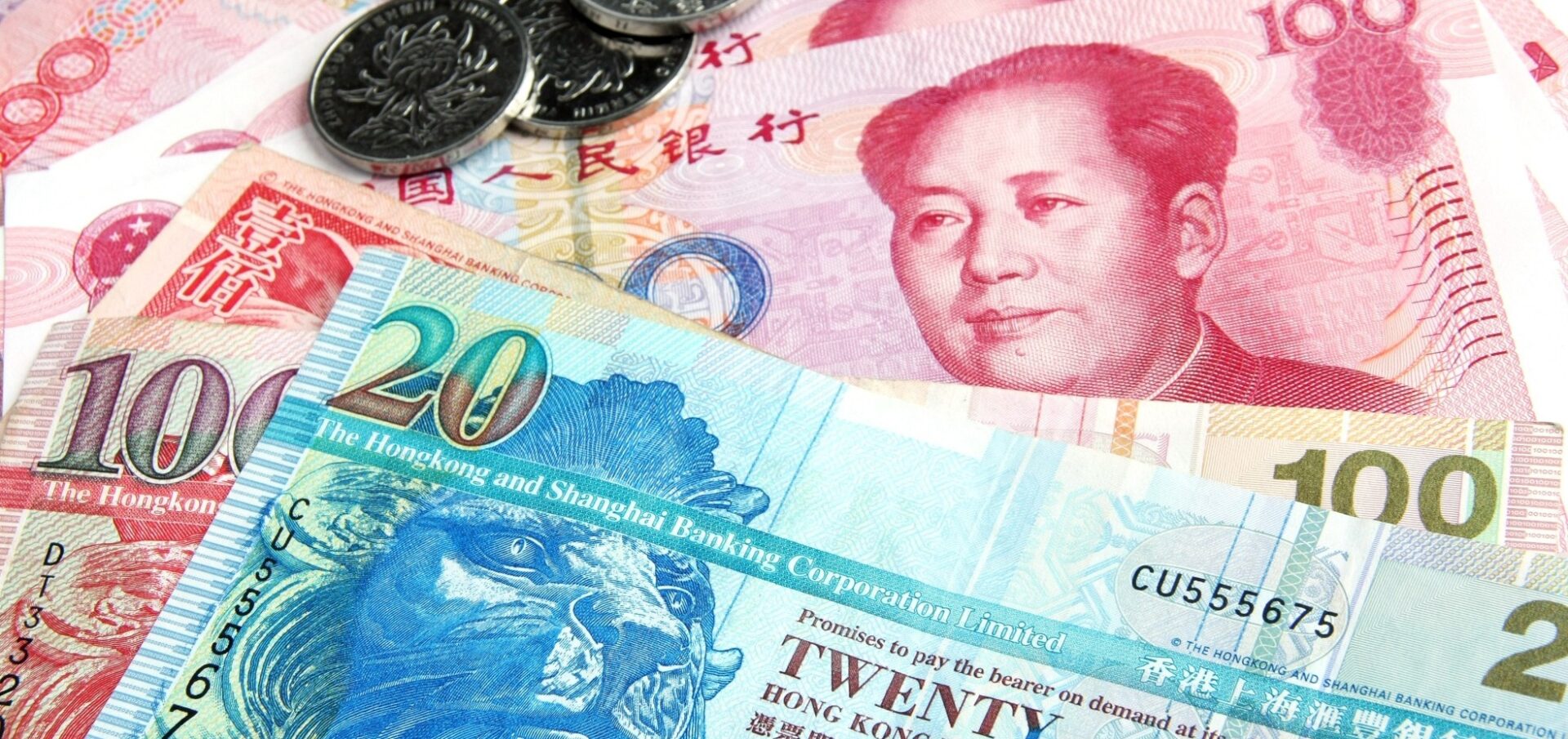
The case, Wong Chi Hung v Lo Wing Pun [2026] HKCFA 14, arose from a currency exchange agreement in which the Respondent deposited RMB 1 million into a designated Mainland bank account in return for the Appellant agreeing to deposit the equivalent HK$ amount into the Respondent’s Hong Kong bank account. But the Mainland account was frozen by the authorities in connection with an unrelated criminal investigation. As a result, no money was paid to the Respondent in Hong Kong.
The Respondent sued the Appellant for breach of contract, or alternatively for unjust enrichment. The District Court ruled that since the exchange was unlawful under Mainland foreign exchange regulation, it was unenforceable as giving effect to it would involve or facilitate serious foreign illegality. However, this would not affect the Respondent’s separate claim for unjust enrichment, being conceptually distinct from a breach of contract, and aims to reverse the transfer but not to enforce the agreement. The Court of Appeal agreed, holding that the Respondent’s claim for unjust enrichment was consistent with both policy and the principle of comity.
The CFA backed the CA’s decision. It declared that the “reliance” approach to domestic illegality – adopted in the UK case Tinsley v Milligan [1993] UKHL 3 – should no longer be followed in Hong Kong. Instead, the “range of factors” approach that places emphasis on substance rather than form in the UK Supreme Court decision Patel v Mirza [2017] should be adopted. Applying that approach, it would be rare for any illegality to be so serious as to render an unjust enrichment claim unenforceable, since such a claim unwinds rather than enforces the underlying illegal contract.
In the context of foreign illegality, the underlying consideration is whether granting restitution would constitute an unacceptable violation of the foreign law, breaching comity. In the present case, the grant of restitution would not involve a breach of comity since any illegality was of a peripheral nature. Accordingly, the CFA dismissed the appeal.
It is worth pointing out that in a concurring judgment, Chief Justice Andrew Cheung reviewed the law in relation to the doctrine of stare decisis – meaning “to stand by things decided” – which lays down when previous decisions are binding precedents.
He clarified that UK Supreme Court decisions are only persuasive and corrected a Court of Appeal decision in Monat Investment Ltd v All Person(s) in Occupation of Part of No 16 Ma Po Tsuen [2023] 2 HKLRD 1311 which, prior to the present case, erroneously treated Patel v Mirza as binding.
The Chief Justice reiterated that only pre-1997 Privy Council decisions on appeal from Hong Kong are binding and that all other overseas decisions, including those of the UK Supreme Court, are persuasive only. Article 84 of the Basic Law places all overseas common law authorities “on the same footing” and no particular jurisdiction has “special status”, he declared.
In summary, the CFA judgment provides welcome clarity, particularly with regard to transactions between Hong Kong and the Mainland which are becoming more common and sometimes informal in nature. In particular, it means an unjust enrichment claim arising from a total failure of consideration can still be pursued even when the underlying contract may be unenforceable. Additionally, the Chief Justice’s concurring judgment reaffirms Hong Kong’s judicial independence and the CFA’s role as our city’s ultimate appellate body.
Alex Liu is Managing Partner of BC&C. His key areas of practice include commercial and corporate litigation, investigations by governmental bodies such as the SFC, ICAC and Commercial Crime Bureau, insolvency and debt restructuring, intellectual property and employment matters. He can be contacted at alex@boasecohencollins.com.
Arthur Chan is a Partner with BC&C. He specialises in Criminal Litigation, being a Recommended Criminal Lawyer in the Doyles Guide rankings, and has a strong record in cyber fraud recovery claims. As well, he develops a broad range of civil and commercial litigation such as immigration, personal injuries and employment issues. He can be contacted at Arthur@boasecohencollins.com.